- Entry
- #15
- Date
- Tag
- Multiplayer
- Feature
- Base building · Built
The first night together
Two players, two PCs, one hut, one very important door. The first milestone is done, and almost everything survived the evening, including us.
The plan for the first milestone fit on a napkin: two people wake up in the valley with nothing, scrape together what they can, build a hut, lock the door, get bitten, get cold, talk to each other through a wall, and die at least once. Ideally in that order.
This week a friend and I finally played it. Two PCs, one hosting, one joining, and a checklist of 57 points. 54 passed on the first evening, which I will happily take. The other three are fixed now, along with a few things nobody had put on the list but everybody noticed.
The star of the evening was the hut. So let’s start there.
A place of your own
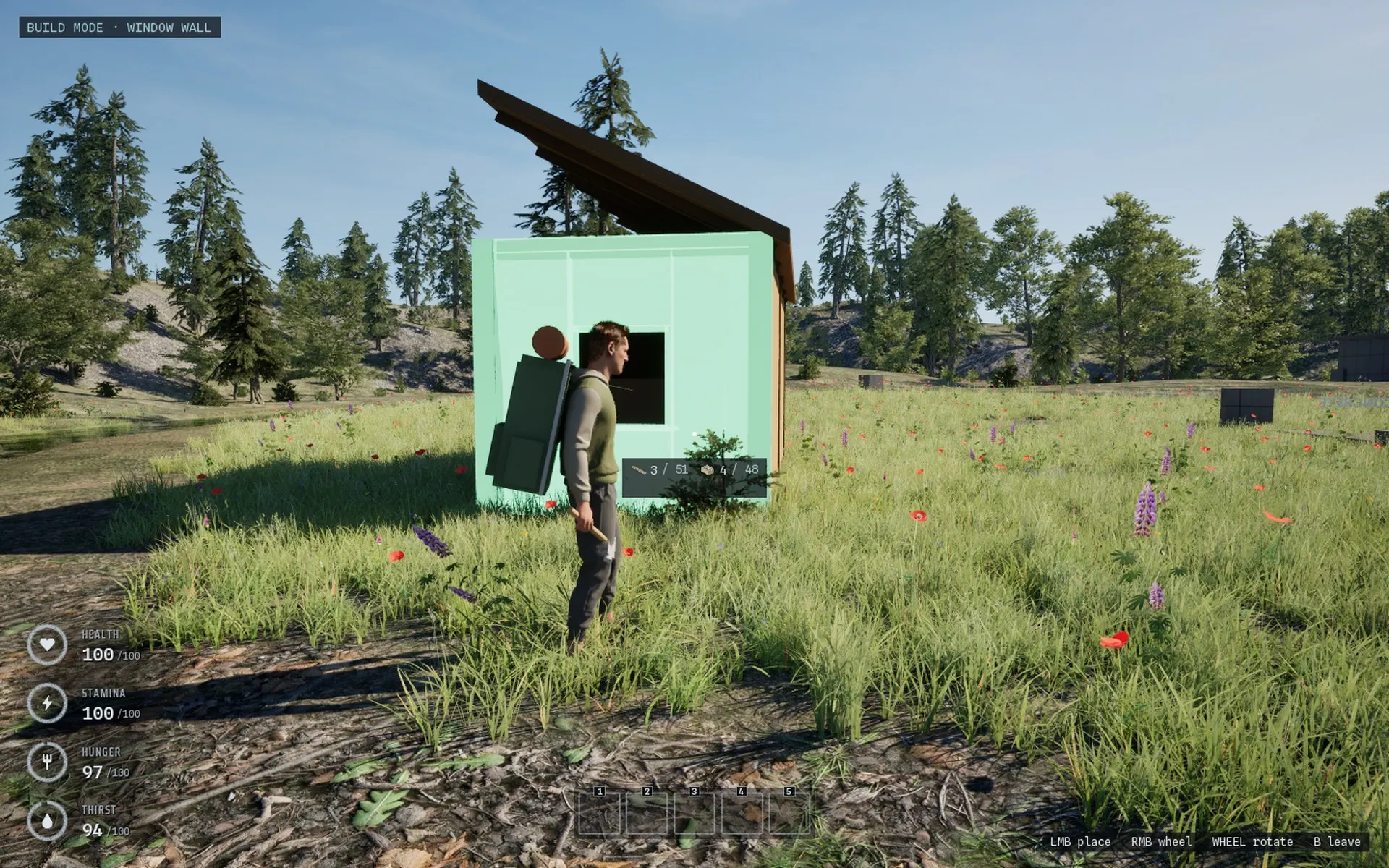
Grab a hammer and press B. A see-through ghost wall floats in front of you, green where it fits, red where it does not, and the crosshair tells you what it will cost. Click, a few hammer blows, done. Hold the right mouse button and a wheel pops up with everything a hammer can do: foundation, wall, door frame, door, window, ceiling, stairs, roof.

Everything snaps to one grid of three by three metres, so you will not spend your evening nudging a wall two centimetres to the left. Material comes out of your pockets or out of any crate nearby that belongs to your base. A hammer blow on your own wall patches it up, and the little cross on the wheel tears a piece down and gives you half the material back, for when the second floor turns out to have been a mistake. The hills are not exactly flat, so Shift and the mouse wheel set how high the next foundation starts, and your hut can climb a slope like a very slow staircase.
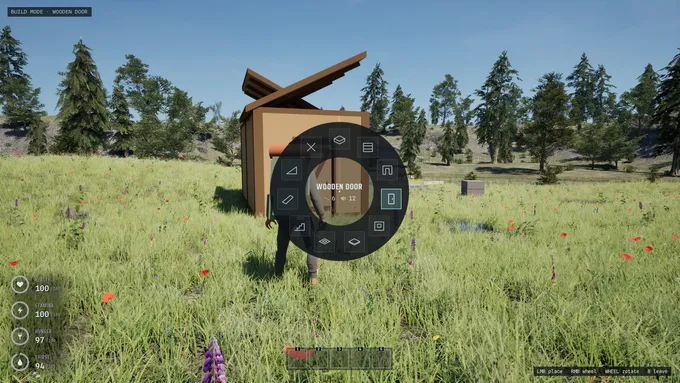
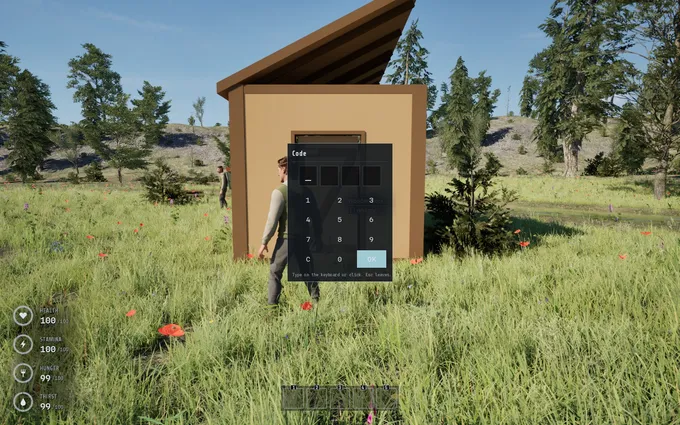
Now, the door. Without a lock it is more of a suggestion. A code lock wants four digits, and whoever types them is in: they can build on the base and use its crates for crafting. If a friendship ends, you change the code and everyone else is out. A key lock comes with a key, and whoever carries that key opens the door, which includes whoever finds it on your body. Crates take the same locks, each with its own code, so knowing the door code gets you into the house, not into your roommate’s snack crate.
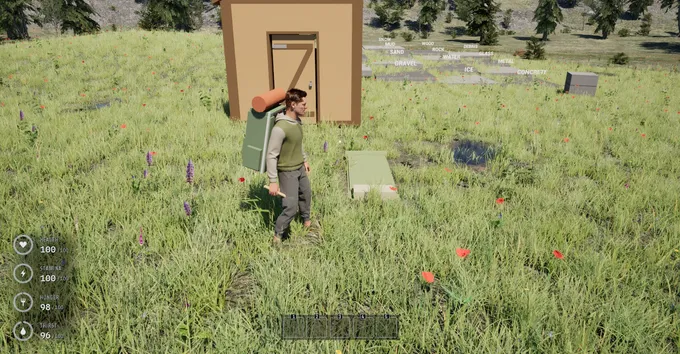
Lay out a sleeping bag, and dying suddenly comes with a menu: wake up at the bag, or somewhere else. You only get one bag. It needs five minutes after each use, because otherwise dying would be the fastest way home, and I have seen how players think. Lose access to the base and the bag stops working too. Nobody wakes up inside a house that changed the locks on them.
The infected walk through an open door like anyone else. Shut it, and they start beating on whatever is between you and them until it gives. Getting them there took longer than building the hut. For a while, a zombie would walk up to the wall, stop a hand’s width in front of it and simply stare, because its path ended so close to the player that it decided it had arrived. Very relatable. Take away what holds a wall up and it falls. A base nobody visits for a few days slowly rots, but only while the world is running, so if the host goes on holiday, the hut waits for them. All of it survives a server restart, doors, codes and crates included.
Light
The nights in this game are dark. Properly dark. Until now the smartest thing to do at night was to stand still and wait for morning, which is a strong survival strategy and a weak game. Now there is a torch, quick to make, lighting everything around you and burning down in about eight minutes, and a flashlight you have to find and feed with batteries. Nothing on the screen tells you how much light is left. The lamp starts to flicker, the flame gets smaller, and you start to sweat. Also: the infected like lights. They see a torch from thirty metres at night, and a torch stuck in the ground makes them wander over to check it out, which makes it a great thing to leave on the other side of a field.
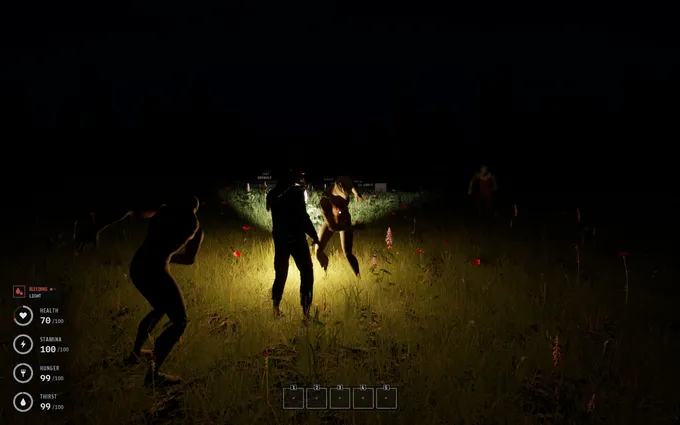
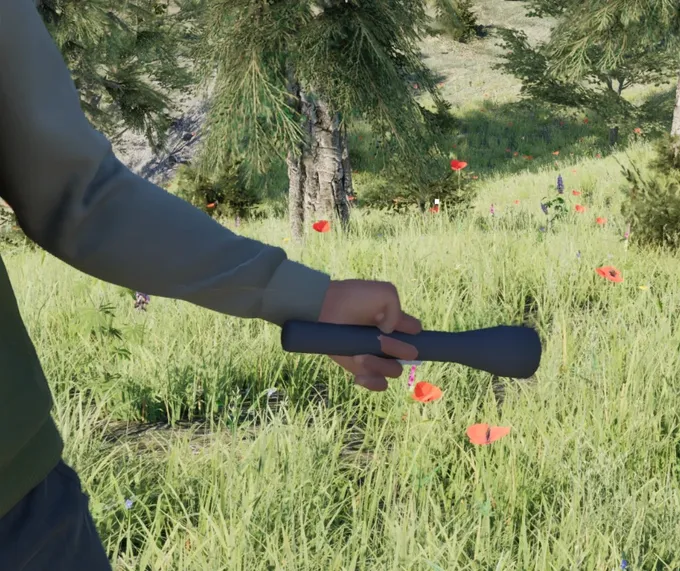
The arm holding the light needed a few attempts. The first version pointed the lamp wherever the camera looked, straight through the chest if necessary. A later one held the flashlight like a cigar, and honestly it looked great, just not like anyone holding a flashlight. It sits in the palm now, the boring way. The correct way.
Wounds
Zombies used to hit you, and that was it. Now a blow can open a wound. A light one stops by itself, a heavy one bleeds until you dress it, and dressing takes four seconds of standing still. Yes, four whole seconds, on purpose: instant bandages turn every fight into a key-mashing contest, so now you have to get away first. Enough hits and an infection sets in that you cannot see until it shows: fever first, then weakness, and hours later you are done. Antibiotics cure it. The strip you tore off your own shirt stops the bleeding but is, let’s say, not hospital grade.

Cold and the campfire
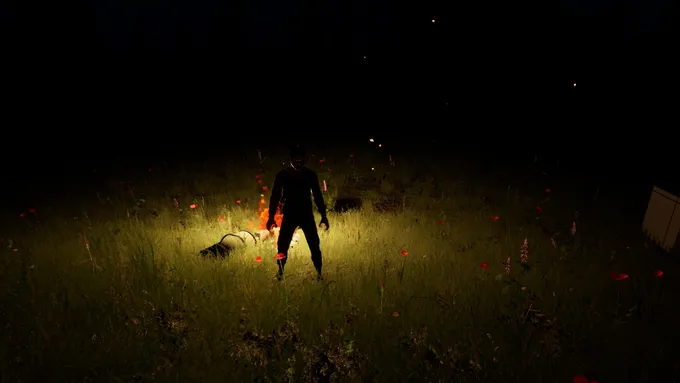
The valley is in late autumn, and now your body knows it. Rain soaks you unless something is over your head, a river soaks you as far up as it reaches, and wet clothes keep you about as warm as a wet towel. First you get chilled, then you shiver, and a rainy night in the open will kill you, slowly. A small arrow tells you which way it is going. A roof helps, warmer jackets are out there somewhere, and four sticks and four stones make a campfire that warms and dries everyone around it. A downpour puts it out unless it has a roof over it, and the infected see it from forty metres, so cosy comes at a price. In the first test the cold crept up so slowly that nobody noticed it at all. It has stopped being polite about that.
Berries
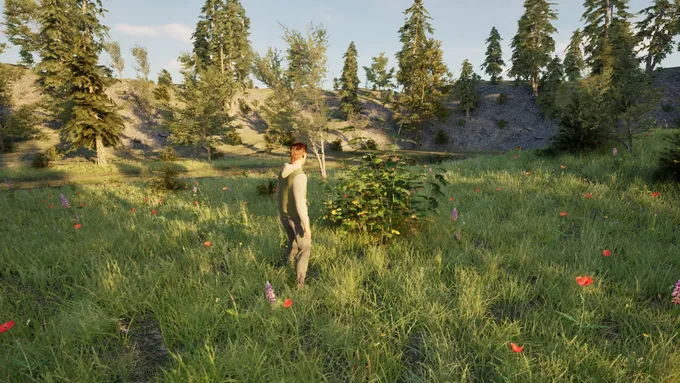
Fresh survivors now find a snack on the way. Raspberries grow in bushes up to your chest, blueberries in low patches in the open, and blackberries in wide brambles towards the forest. Tap E and a handful goes into your pocket, even at a full run, like a proper hiker. Hold E and you eat straight from the bush, like a slightly less proper hiker. You can watch a bush empty as you pick it, and it grows back after a while, as long as nobody is standing next to it waiting.
Voice and gestures
Hold V and whoever stands near you hears you, from the direction you are standing in, fading out towards forty metres and muffled through a wall. Nothing tells you who is talking, just a small arc round the crosshair that shows where it comes from. Who it is, you find out yourself, which is half the fun and occasionally all of the horror. The infected hear you too, so maybe save the long stories for inside.
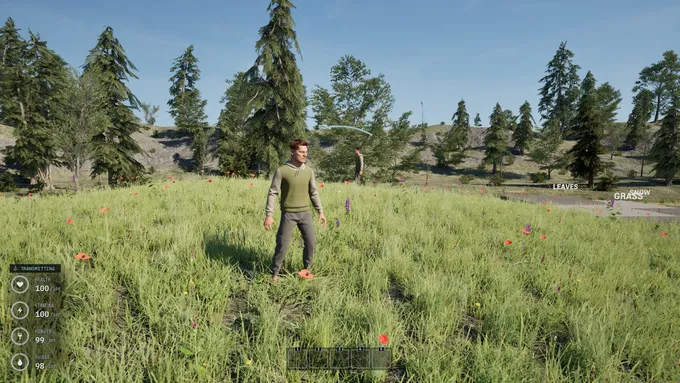
No microphone, or nothing you want to say out loud? G opens an emote wheel: wave, hands up, come here, get back, point, thumbs up. Point the mouse at one, let go, done. It works on the move, and if you are standing still you turn to whoever you are looking at first. Hands up with a crowbar still in your fist is not exactly a surrender, and the other player can see that. Make of it what you will.

Menus
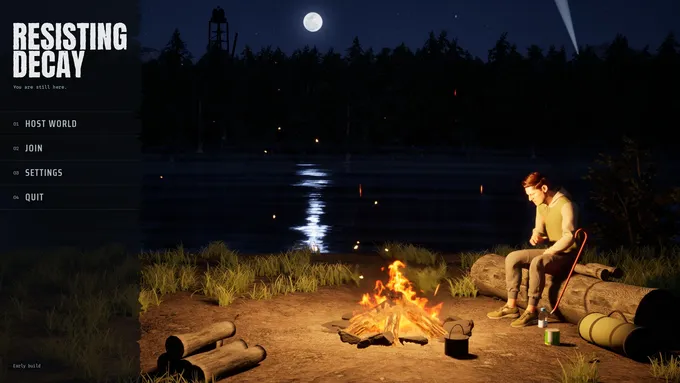
For a long time the game started with a grey list that looked like a spreadsheet. Now it starts at a camp fire on the bank of a lake, at night, under the moon. A survivor sits on a fallen trunk, and the menu is a thin dark strip beside him that lets the night show through. Across the water a mine’s headframe stands against the sky, and an army searchlight sweeps the hills. He feeds the fire when it burns low, turns his head when something screams far away, and when it is close, his hand goes to the crowbar. I may have spent a little too long watching him. Esc brings the same strip up inside a world, which keeps running behind it, because there is no pausing a world other people are walking around in. The settings page is the same in both, and nothing on it counts until you press Apply. On a PvP world the brightness slider stops at neutral, so nobody gets night vision out of the options menu.
What the evening fixed
- The Nearby list stayed empty after you died and woke up again. It now notices that you are someone new.
- Another player’s lamp, a planted torch or a campfire lit up a room straight through its walls if you stood close enough. Walls are opaque again.
- Someone who joins a world now gets to know its name in the pause menu.
- Shift and a click on a stack splits it in half.
- The test valley has an edge now. Before, you could jump off the hills at its border and fall forever. I checked. It really was forever.
Not yet
Almost everything you hold or build is still a placeholder model, in proud shades of grey. You cannot dress a friend’s wound or pick your microphone, and blood mostly vanishes in tall grass. And the valley is still a test map. A nice one, but still.